Organizing Systems7 min read
Why Your Pantry Keeps Falling Apart, and How to Fix It for Good
A pantry that looks perfect in week one and collapses by week five was never organized around the way the household actually eats.
Written by The Home Organizers Long Island Team
We get called back to pantries more than any other room, and it is almost never because the first attempt was careless. It is because the pantry was organized by food group, and nobody in the house shops, cooks or eats by food group.
Grouping all the cans together and all the boxes together photographs beautifully. It also means making a school lunch requires items from four different shelves, which is exactly the kind of friction that quietly kills a system on a Tuesday morning.
Zone by occasion, not by category
Organize instead around the moments when the pantry actually gets opened. In most Long Island households that is roughly five: weekday breakfast, school and work lunches, dinner staples, snacks, and baking.
Everything needed for one of those moments lives together, in one place, at one height. Breakfast is a single reach. Lunch is a single reach. It stops mattering that the oats are technically a grain and the raisins are technically a fruit, because nobody has ever thought about it that way while standing in a kitchen at seven in the morning.
Put height to work
Shelf height should follow frequency and who is reaching.
Anything used daily belongs between hip and eye level. Anything used weekly can go above or below that band. Anything genuinely occasional, the baking equipment, the big serving platters, the holiday things, goes to the top shelf where it costs you nothing.
If there are children in the house, their breakfast and lunch items go on the lowest shelves. Not as a nice touch, but because it is the single change most likely to remove a job from your morning.
Depth is the real enemy
Most pantries fail on depth rather than on volume. A shelf eighteen inches deep has a back half that is functionally invisible, and anything that lands there is bought again within a month.
Two inexpensive fixes solve almost all of it. Turntables in the deep corners, so the back rotates to the front. And bins used as drawers, so you pull the whole group out rather than reaching past the front row. The bin does the reaching for you.
Do not buy either until after you have decided what is staying. Containers bought first will dictate the system, and it will be the wrong system.
Decant what earns it
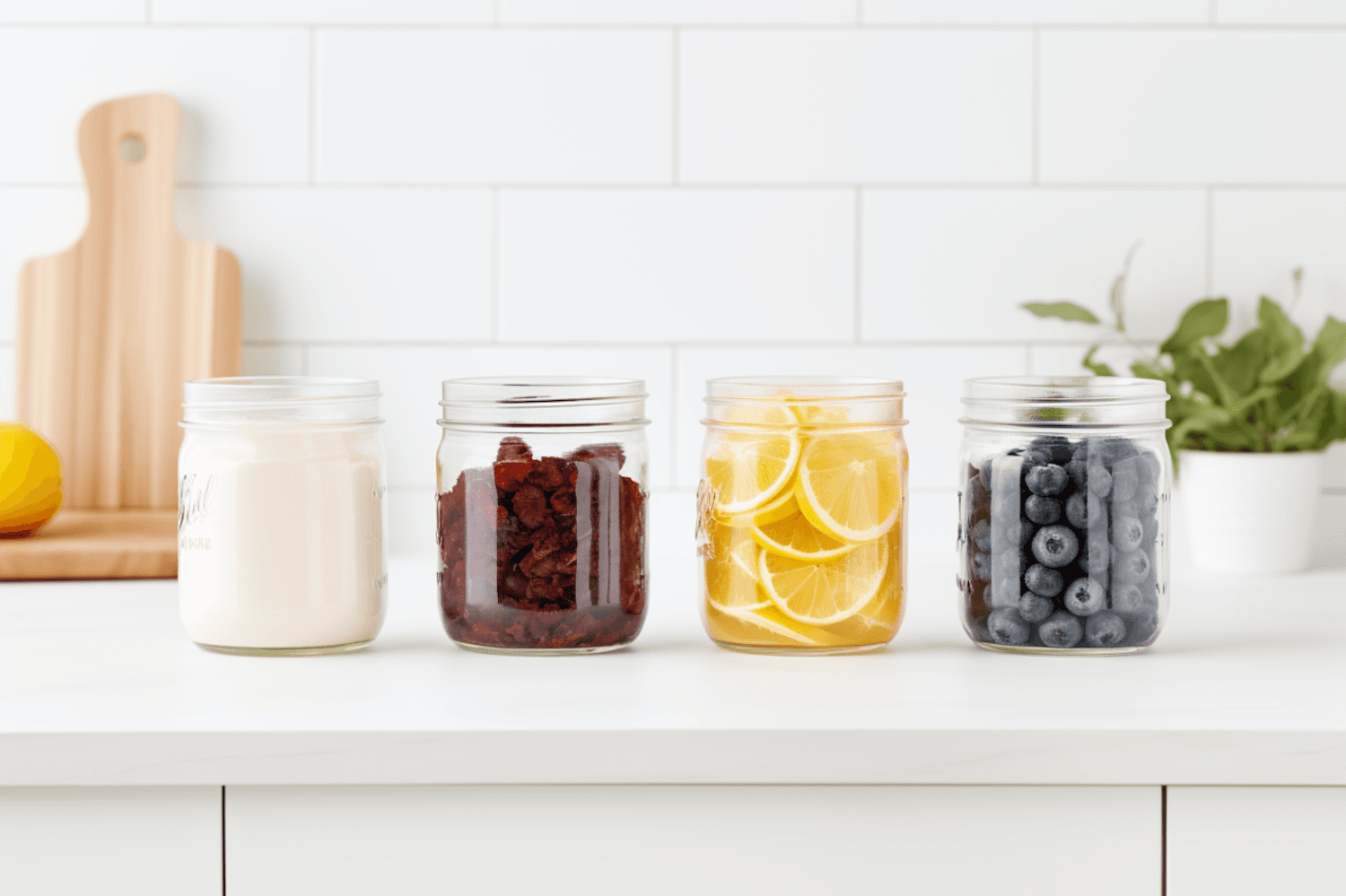
Decanting into clear canisters is genuinely useful for the staples that come in bags that will not stand up: flour, sugar, rice, pasta, cereal. You can see the level, so you know when to buy more.
It is not useful for everything, and a pantry where every single item has been decanted is a pantry where somebody has taken on a permanent unpacking job. Decant the six or seven things that misbehave and leave the rest in their packaging.
When you do decant, write the cook time and the date on the label. It is the only reason anybody keeps the box, so remove the reason.
Label the shelf, not just the container
The last piece is what makes a pantry survive contact with other people. Labels go on the shelf edge as well as on the containers, so that when somebody else unpacks the groceries, the system tells them where things go.
A pantry only stays organized if the household can maintain it without you. That is the whole test.
Want a hand with it
We work across Nassau and Suffolk, and the first twenty-five minutes are free.
Book a free consultation